Dry Heat, Dust and Wood
Dry heat shrinks and checks unprotected wood, and this valley supplies plenty of both. Wood is hygroscopic: it settles to a moisture content in balance with the temperature and humidity of the air around it, and it shrinks as it dries. Most of that shrinkage happens across the grain, where tangential shrinkage often runs about twice the radial.
When the outer layer of a board dries faster than its core, drying stresses build, and once they exceed the wood's strength across the grain, the surface checks and splits. Wood left exposed to strong sun dries too fast in a dry summer for exactly that reason. San Bernardino's summers are hot and arid, and the Santa Ana winds push warm, dry air through the Cajon Pass in autumn on top of that.
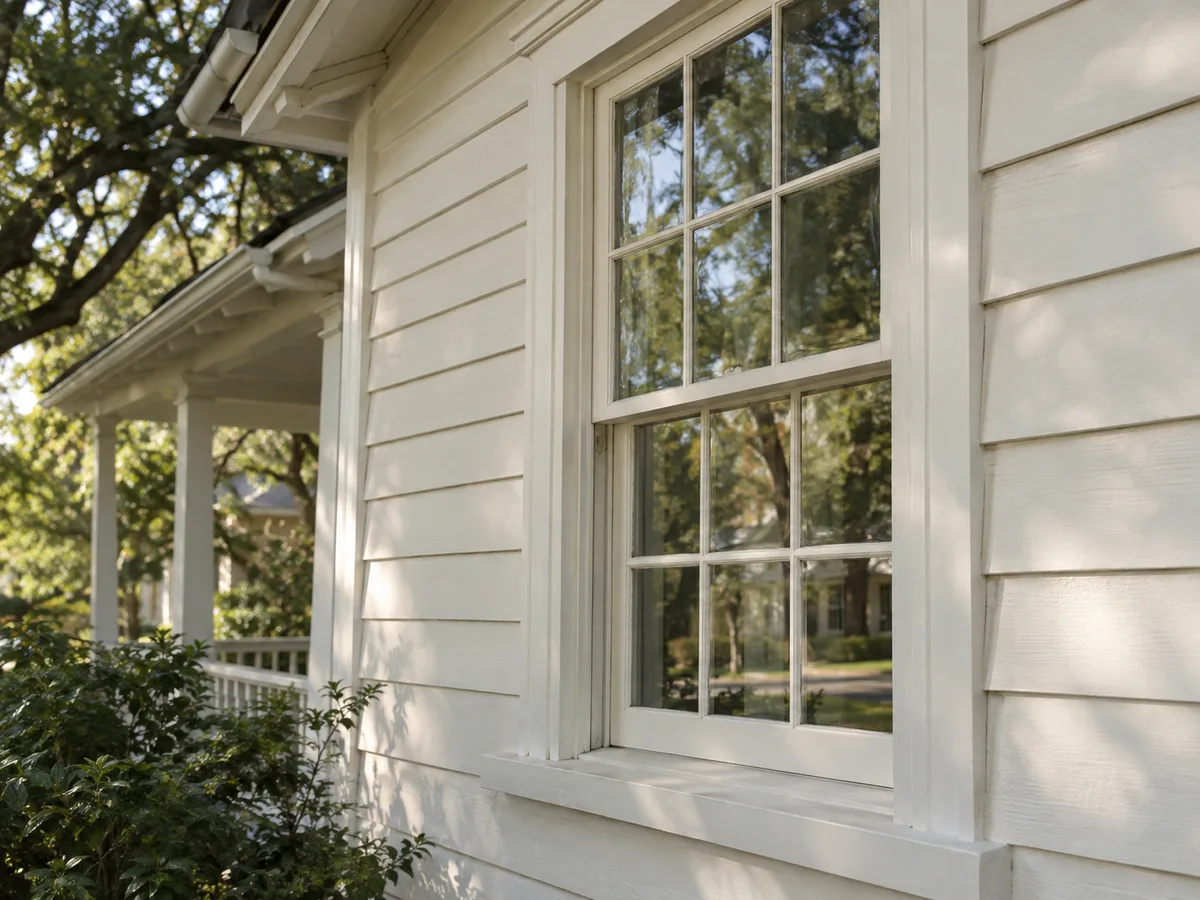
Cladding takes the sun so the wood does not. Heavy extruded cladding set slightly off the wood leaves an air space that improves thermal performance and lets moisture escape, so the wood underneath stays close to the stable indoor conditions it was dried for. Factory-applied wood protection before assembly adds another layer against the dry seasons and the occasional wet winter.
Dust is the other local enemy. Grit settles in sill tracks and on exterior finishes, so a smooth, pre-finished cladding that rinses clean is worth more here than it would be on the coast.