U-factor
How well the window keeps heat from moving through it. Lower is better, and the NFRC lists a range of roughly 0.20 to 1.20 for windows. Old single-pane aluminum sits at the poor end of that scale.
San Bernardino Window Replacement is San Bernardino County's trusted specialist for energy-efficient windows in San Bernardino, CA, specializing in Low-E glass packages, NFRC-rated insulated glazing and Title 24 compliant replacement units. We offer argon-filled dual-pane windows and warm-edge spacer systems.
Our team provides whole-house change-outs of single-pane aluminum sliders, delivering cooler afternoon rooms for homes and a documented energy upgrade for both residential and commercial projects. The installer who measures every opening is the one who sets the new unit, and we write the NFRC U-factor and SHGC for each window on the quote before a single unit is ordered.
From matching a spectrally selective coating to each wall's sun exposure to the installation certificate the building inspector signs at final, our team handles every detail. Serving San Bernardino, Redlands, Highgrove and Upland, we treat the glass as the part of the job that decides how the house feels in August.
Why San Bernardino Window Replacement
The installer who measures your openings is the one who sets the new windows, from the first visit to the final walk.
The NFRC label is the one fair way to compare energy-efficient windows in San Bernardino, because every certified product is rated by the same independent, nonprofit body using the same test methods. Two quotes can both say dual-pane Low-E and still describe very different glass. The label settles it in five numbers.
How well the window keeps heat from moving through it. Lower is better, and the NFRC lists a range of roughly 0.20 to 1.20 for windows. Old single-pane aluminum sits at the poor end of that scale.
The share of the sun's heat the window lets in, on a scale from 0 to 1. A low number resists solar heat, which is what keeps a room cool through a valley summer.
How much daylight comes through, also from 0 to 1. Higher means a brighter room, so the goal on most walls is a low SHGC without a dark, tinted look.
Air leakage is shown when a manufacturer chooses to rate it, at 0.3 or under, and lower is tighter. Condensation resistance runs the other way: a higher number resists fog on the inside glass. We write these values for every unit on your quote, opening by opening, so you can hold our numbers against anyone else's and see exactly what you are paying for.
California's energy code, Title 24 Part 6, requires new and replacement windows, skylights and doors that are at least a quarter glass to meet a maximum U-factor and a maximum SHGC. The California Energy Commission updates these standards every three years, and the 2025 edition took effect on January 1, 2026.
Here is the part most buyers miss. Title 24 sets the minimum, not the best choice for your house. A window can pass the code on paper and still be the wrong glass for an unshaded west bedroom. We use the code limit as the floor and pick the package from there.
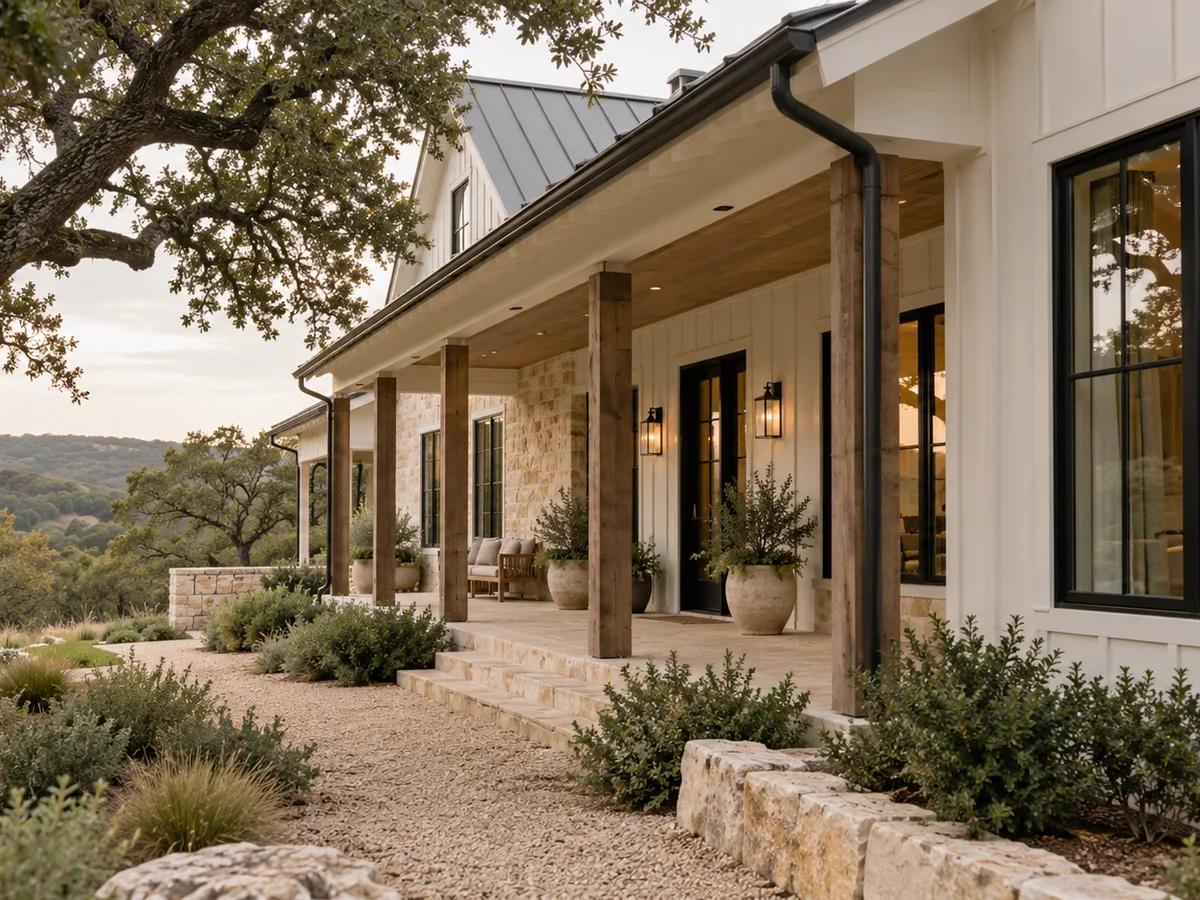
On a hot west wall in San Bernardino, the SHGC matters more than the U-factor, because most of the afternoon heat arrives as sunlight through the glass rather than as heat conducted through the frame. San Bernardino has a hot-summer Mediterranean climate with dry summers that reach desert-level highs, and the city recorded 118 degrees Fahrenheit on July 6, 2018. Santa Ana winds channel warm, dry air through the Cajon Pass in autumn as well.
That is why one glass package rarely fits a whole house. The Department of Energy notes that orientation, climate and building design can call for different glazing on different windows of the same building. In practice we look at each elevation:
Tint is not the shortcut it looks like. Heat-absorbing gray and bronze tints cut light and heat together and do not lower the U-factor, and reflective coatings darken the view. A spectrally selective Low-E coating is built to reflect the infrared part of sunlight while letting visible light through, which is the balance a valley house usually wants.
A Low-E coating is a microscopically thin metal or metal-oxide layer on one or more panes that reduces infrared heat transfer, keeping heat on the side of the glass where it started. In summer that means the sun's heat stays outside.
Pyrolytic coatings deposit tin oxide at high temperature at the float glass plant. Sputtered coatings lay down thin silver layers in a vacuum chamber, and because silver is unstable in open air, it must be sealed inside an insulated glass unit. Soft-coat sputtered products generally reach a lower SHGC than hard-coat pyrolytic ones, which is why they dominate hot-climate packages.
Argon between the panes is the common fill because it is affordable and conducts heat about a third less well than air. Krypton insulates better still but costs more and is mostly used in thin or high-performance units.
The spacer holds the panes apart and seals the gap. Warm-edge spacers reduce heat flow and condensation at the glass edge compared with plain metal, and the desiccant packed inside absorbs moisture trapped during manufacture. When that perimeter seal fails, the unit fogs between the panes, which is one more reason to buy from a product line with a good seal design.
A single pane of glass is a weak insulator, with an R-value of about 1, and the space between panes in an insulated unit provides most of a modern window's insulation. Aluminum frames are strong, light and nearly maintenance free, but metal conducts heat very well, so a frame without a thermal break carries outdoor heat straight to the inside edge of the glass.
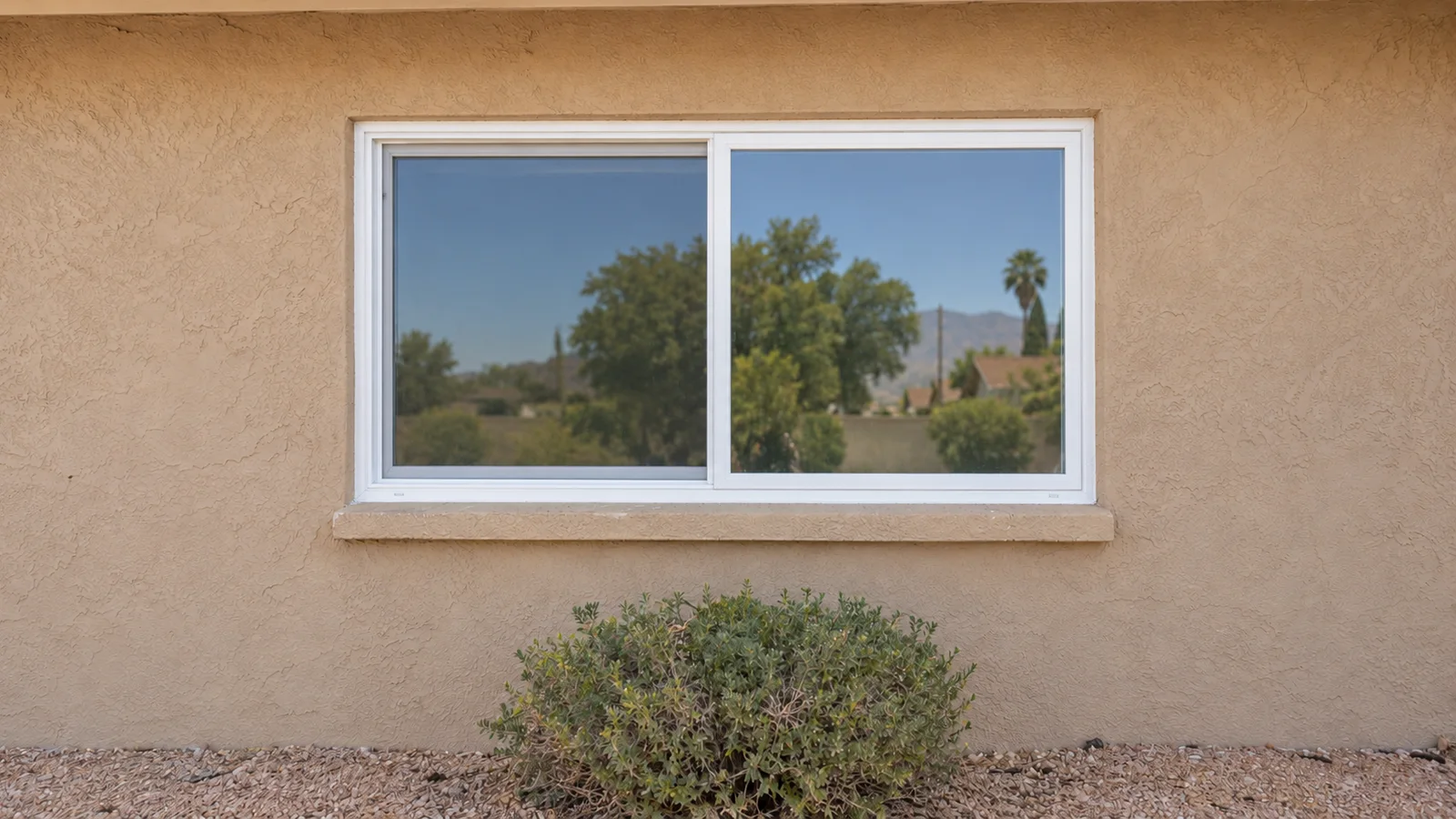
That is the pairing on a lot of original sliders in this valley, and it is why an energy upgrade is usually a whole-house job rather than one window at a time. Replacing the worst elevation first is possible, but the label values only pay off fully when every opening is done to the same standard.
The frame is a separate decision from the glass. Fiberglass, vinyl and clad-wood frames can all carry a Title 24 compliant package, and each has its own page on this site. Whether the new unit goes in as a retrofit inside the old frame or as a full-frame install with stucco cut and patched is decided at the measure and written on the scope.
Managing an association, an apartment building or a commercial property with the same old glass? The same label-driven spec works across many units, and we build that as a bid rather than a homeowner quote.
A whole-house Title 24 energy window upgrade in San Bernardino is typically estimated at roughly $6,000 to $18,000 per home, depending mostly on how many openings there are and which glass and frame you choose. The spread is wide because houses are. These are the drivers we price:
Utility rebates and tax credits come and go, so we check what applies at quote time instead of promising a figure. Every number above is an estimate and subject to change. The final price is the one on your written quote, set after a free in-home measure of every opening.
The process
Four steps, and nothing is ordered until you have signed off on the written quote.
We look at every opening with you, check the frames, the sills and the stucco around them, and measure each one for the unit that will go in it.
Frame material, glass package, label values, install method and the order date arrive in writing. For a community or a commercial building the work is split into phases, so every resident or tenant knows their day.
Old units come out, openings are checked for water damage, and each new window is set, flashed and sealed, with a water test at the sill before trim goes back.
We open and lock every window and door with you before calling it finished, and adjust anything you flag.
Questions
Yes. Replacement windows and doors that are at least a quarter glass must meet the maximum U-factor and SHGC for the climate zone under Title 24 Part 6, and the inspector checks the NFRC labels at final. We confirm the limits for your address before anything is ordered.
On sunny west and south walls the SHGC usually matters more, because the heat comes in as sunlight. The U-factor still counts on every wall, so we choose a package that is low on both and lowest on SHGC where the sun hits hardest.
Not if the coating is chosen for it. Spectrally selective Low-E reflects infrared heat while passing visible light, so a good package keeps the Visible Transmittance high. Tinted glass is the option that darkens a room, and we rarely recommend it.
A whole-house upgrade here is typically estimated at roughly $6,000 to $18,000, driven by opening count, frame and glass. Those are estimates; your written quote after the in-home measure sets the actual price.
Sometimes. Early dual-pane units often have clear glass with no Low-E coating, or failed seals that fog. If the label values on new glass are far better on a west wall, the upgrade is worth pricing; if the existing units are already Low-E and sealed, we will tell you so.
Yes. We prepare the alteration paperwork for the window change-out, keep the NFRC labels on the glass for the inspector, and hand over the installation certificate at final inspection.
Programs exist from time to time, but they change and have their own rules. We check what is open when we quote and never build a price around a rebate that might not pay.
Yes. One label-driven glass spec applied across a whole community or building is exactly how those jobs should run, and we price them as a bid from the unit count and opening schedule.
Homeowners get a free measure at the house. Boards, managers and contractors can send plans or an opening count for a bid.
Calls only, we do not receive text messages.