Skip to content

Victorian and Craftsman Window Restoration for Redlands and San Bernardino Homes

San Bernardino Window Replacement is San Bernardino County's leading choice for historic window restoration in San Bernardino, CA, specializing in rebuilding double-hung sash, replacing sash cords and weights, and reglazing original cylinder glass. We offer replicated wood sash and matched muntin profiles.

  • Free in-home measure
  • Written quote, opening by opening
  • NFRC label values on paper

Get a free window quote

About victorian & craftsman window restoration with us

Our team provides lead-safe work practices on every pre-1978 window opening, delivering period character that can stand up to design review for both residential and commercial projects. We photograph and measure each sash before anything comes out of the frame, and the written scope names which units are rebuilt, which are replicated and which frames stay, so every window has a plan before work begins.

From pinning a loose sash cord and consolidating a soft sill with epoxy to replicating a full house of 4-over-1 Craftsman sash, our team handles every detail. Serving San Bernardino, Redlands, Highgrove and Claremont, we plan period work around whatever review your street may require.

Why San Bernardino Window Replacement

How We Work

The installer who measures your openings is the one who sets the new windows, from the first visit to the final walk.

Measured by the installerEvery opening sized by the person who sets the unit
Quote in writingFrame, glass package, U-factor and SHGC listed per opening
Sill flashed and testedFlashing and a water test before any trim goes back
Tidy siteFloors and furniture covered, old units hauled away the same day

Restore or Replicate: How We Decide, Sash by Sash

Historic window restoration in San Bernardino starts with one decision per opening: rebuild the original sash, or replicate it. The answer is rarely the same for every window on a house. A west-facing sill that has taken decades of valley sun and sprinkler spray may be soft through, while the sash on a shaded porch wall are sound under ten coats of paint.

Paint failure is a clue, not a verdict. The National Park Service's guidance on wood windows notes that blistering and peeling paint usually marks where water got in, and that the wood beneath ugly paint is frequently sound. So every sash is checked by hand, not judged from the curb.

  • Sound wood, failed paint and putty: strip, reglaze, new cords, weatherstrip and repaint. This is the most common outcome.
  • Local rot at the sill or bottom rail: consolidate and patch with epoxy, or splice in new wood, and keep the sash.
  • Sash too far gone to stabilize: replicate it to the original profile and fit it into the existing frame.
  • Frame and sash both failed, or the opening was altered years ago: a new period-correct unit, chosen after the rest of the house is assessed.

We write that decision for every window on the scope, so you can see why one sash is saved and its neighbour is replaced.

Rebuilding Original Sash and Frames

Rebuilding a double-hung window means taking it apart the way it was built. The sash is balanced by a hidden weight on a braided cord or chain running over a pulley at the top of the frame, and a broken cord can only be fixed by opening up parts of that frame. Done carefully, nothing visible is scarred.

Inspect where water collects

Deterioration in wood windows usually begins on horizontal surfaces and joints: the sill, the joint between sill and jamb, the corners of the bottom rail and the muntin joints. We probe those spots with an awl, because a sound-looking skin can hide soft wood underneath.

Free the sash

The paint seal along the interior stop is cut, the stop is worked loose with putty knives from the sash side so the face is not marked, and the sash cords are pinned so they do not drop into the weight pocket.

Reglaze the old glass

Failed putty is removed by hand, the glazing points are pulled, and each pane is numbered so it returns to the same sash. A bed of putty goes into the rabbet, the pane is pressed in, new points hold it, and a final bevel of putty seals the edge before paint laps slightly onto the glass.

Repair the wood

Soft wood is stabilized with a consolidating epoxy and built back up with an epoxy patch, sloped so water runs off rather than sitting on the sill. Worse damage gets a matching piece spliced in.

Restring and weatherstrip

New cords or chains go in through the pocket door in the jamb, and weatherstripping goes on the rails and stops so the rebuilt sash runs smoothly and stops rattling in a Santa Ana wind.

Matching Profiles, Muntins and Glass When a Sash Must Be Replicated

Replication means matching the profile, not just the size. The Park Service lists what a replacement has to respect before any product is chosen: the pattern and size of the openings, the proportions of frame and sash, the pane layout, the muntin profiles, the wood species, the paint colour, the character of the glass, and details such as arched tops or hoods.

Craftsman sash

Craftsman and California bungalow houses, common in Southern California from about 1905, typically carry 4-over-1 or 6-over-1 double-hung windows: a divided upper sash over a single lower pane. A replica keeps that division and the slim upper muntins.

Victorian sash

On a Victorian house the rail and stile widths and the pane layout carry the look. A replica copies the proportions of frame and sash, not just the glass size, because those proportions are what the street sees.

Muntin width

True divided-light muntins on houses like these typically run about 1/2 to 7/8 inch wide. A bar much fatter than that is the giveaway of a modern insert.

Glass

Old glass carries a slight waviness that comes from how it was made. Traditional cylinder glass is still produced, so a replica can carry restoration glass where you want the look kept. One trade-off is written plainly on the quote: putting insulated glass into a muntin-divided sash reduces how well that insulation works. For a period house, a rebuilt single-glazed sash with good weatherstripping, plus an exterior storm panel if comfort demands it, is often the better answer.

Lead-Safe Work Practices on Pre-1978 Windows

Lead paint changes how the work is done. Lead-based paint was banned for homes in 1978, and the EPA estimates about three-quarters of homes built before then still contain some. Window sills and sash are friction surfaces, which the EPA names as the places most likely to turn paint into chips and dust.

Under the EPA's Renovation, Repair and Painting rule, window replacement is always covered regardless of how much paint is disturbed, and anyone paid to disturb paint in a pre-1978 home must be trained and certified in lead-safe practices. Ask whoever does your work to show that paperwork before the first sash comes out.

  • Work areas inside and out are closed off with plastic sheeting before paint is touched.
  • No dry scraping, dry sanding, torching or burning, and no heat gun run hotter than federal housing guidance allows.
  • Any machine sanding runs with HEPA-filtered dust collection.
  • Children and pets stay out of work areas until cleanup is finished, and a clearance dust test by an independent tester can be arranged.

These practices take more time than ripping sash out, and the time is on the quote rather than hidden in it.

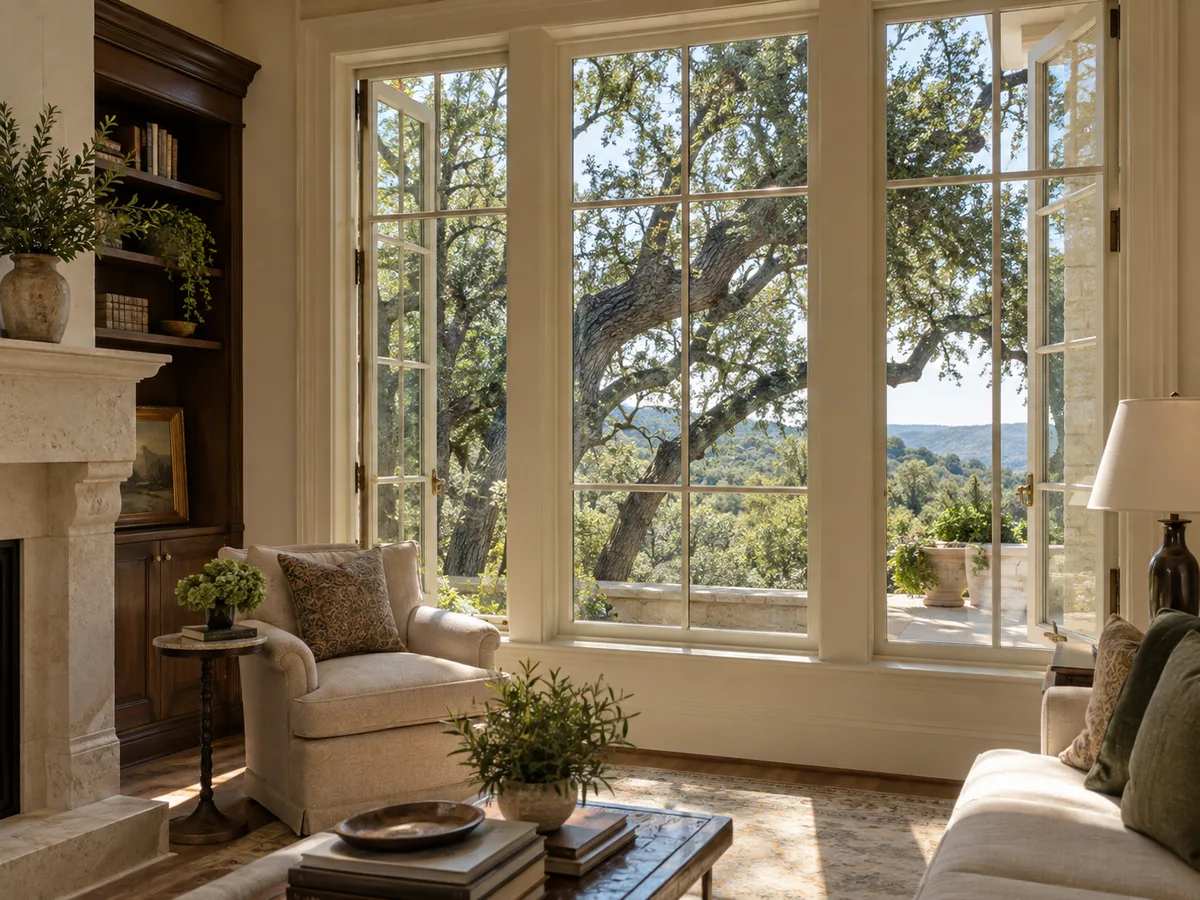
Wood-clad windows in San Bernardino: tall clad-wood casement windows in a living room

Historic Review in Redlands and Approvals Before Work Starts

In Redlands, exterior changes to a designated historic property generally need a Certificate of Appropriateness before work starts, and buildings inside a designated historic or scenic district can be reviewed even when they are not individually designated. Minor work is decided by staff and major work by the Historic and Scenic Preservation Commission, a seven-member citizen body.

The city adopted Historic Architectural Design Guidelines in September 2024 and expects exterior changes to be consistent with the Secretary of the Interior's Standards, which favour repair over replacement and matching over approximating. That is the same order this page works in, so a restoration scope usually reads well to a reviewer.

Redlands earned that stock honestly. The railroads arrived in the 1880s, the city incorporated in 1888, and citrus money built houses such as the Morey Mansion of 1890 and Kimberly Crest of 1897. The Smiley Park Historic District is on the National Register. Houses from that boom are the ones this page is written for.

  • We ask the Planning Division whether your address needs review before we price the job.
  • Our written scope lists every window with its treatment, which is the document a reviewer wants to see.
  • Where review applies, ordering waits until approval is in hand.

In San Bernardino and the other cities we serve, we check the local rules for your address the same way before any order is placed.

Period Windows on Larger Buildings and Whole Houses

Period window work is worth the most when it is done for a whole house or a whole building at once, because the containment, the access and the review happen once. That is how we scope it.

  • Whole-house restorations where every original sash is assessed, rebuilt or replicated in one programme.
  • Victorian homes converted to offices, inns or apartments, where the work is phased around occupants and tenants.
  • Older commercial and civic buildings with wood sash, quoted from drawings or a site walk with a written schedule by elevation.
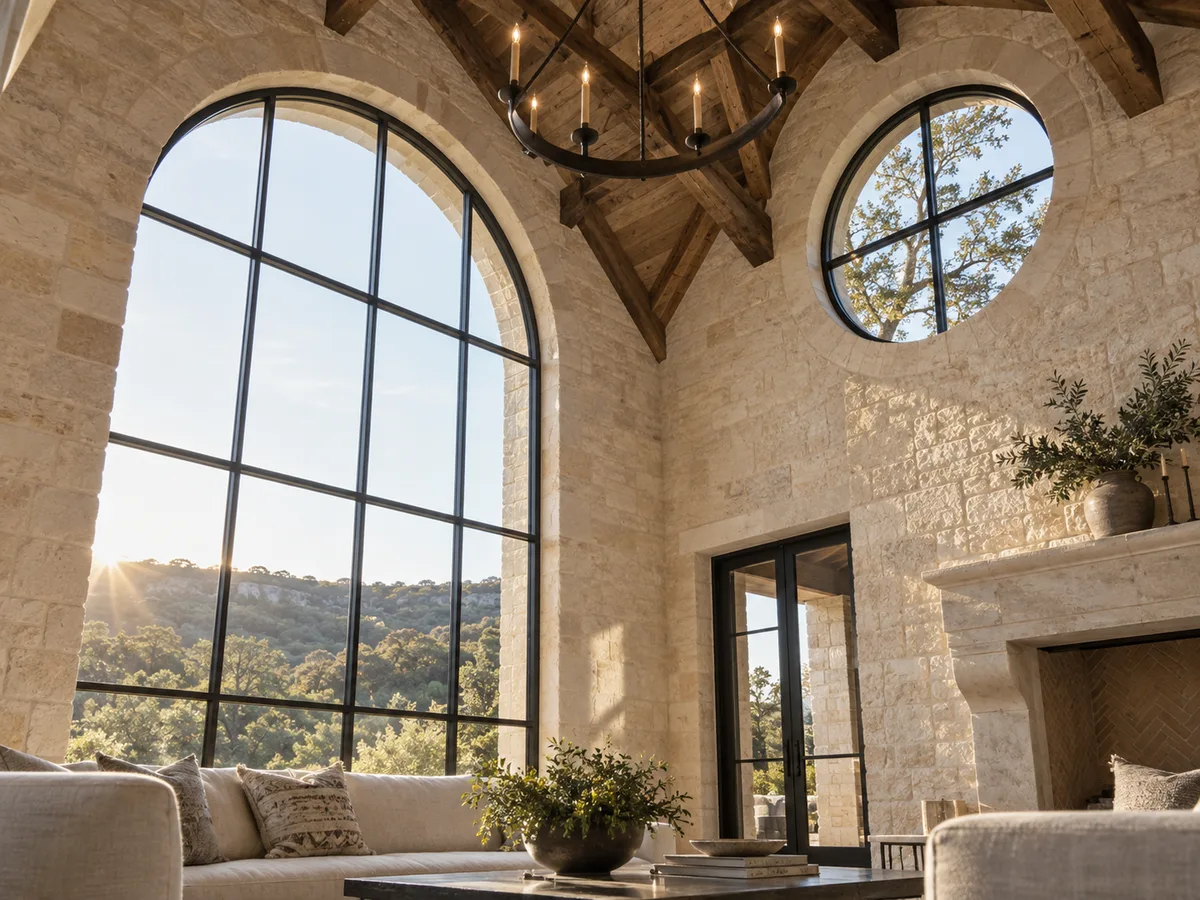
Arched and round windows in San Bernardino: a tall arched black-framed window and a round window in a vaulted stone room

What Period Window Work Costs

Victorian and Craftsman window work in the San Bernardino area is typically estimated at roughly $800 to $3,000 per window, so a whole house of original sash usually totals well above $10,000. Where a given window lands depends mostly on how much wood can be saved and how much has to be milled new.

  • Condition of the sash and frame, and how much epoxy repair or splicing it needs.
  • Rebuild versus a replica sash milled to the original profile.
  • Number and size of openings, and muntin count per sash.
  • Glass choice: original glass reused, restoration glass, or insulated glass where it suits.
  • Lead-safe containment and cleanup on pre-1978 paint.
  • Second-storey access and scaffolding.
  • Interior and exterior trim, paint and storm panels.
  • Historic review preparation and permits where required.

All of these numbers are estimates, and they are subject to change once each sash has been inspected. The written quote that follows the free in-home assessment sets your final price.

Frames, Glass and Openings

The process

How a Window Job Runs

Four steps, and nothing is ordered until you have signed off on the written quote.

  1. The measure

    We look at every opening with you, check the frames, the sills and the stucco around them, and measure each one for the unit that will go in it.

  2. The written quote

    Frame material, glass package, label values, install method and the order date arrive in writing. For a community or a commercial building the work is split into phases, so every resident or tenant knows their day.

  3. Install and flash

    Old units come out, openings are checked for water damage, and each new window is set, flashed and sealed, with a water test at the sill before trim goes back.

  4. The final walk

    We open and lock every window and door with you before calling it finished, and adjust anything you flag.

Questions

Victorian & Craftsman Window Restoration: Common Questions

Should I restore or replace the original windows on my Victorian or Craftsman house?

Restore wherever the wood is sound or can be stabilized, and replicate only the sash that cannot be saved. Original sash is often worth rebuilding once it is reglazed and weatherstripped, and repair is the order the Secretary of the Interior's Standards favour.

How much does historic window restoration cost?

Most period window work is estimated at roughly $800 to $3,000 per window, depending on condition, rebuild versus replica and lead-safe requirements. These are estimates subject to change, and your written quote sets the final price.

My windows are painted shut. Can they still be saved?

Usually. Painted-shut sash is one of the most common problems with old double-hung windows, and the wood under heavy paint is often sound. Cutting the paint seal, freeing the stops and restringing the sash brings most of them back into use.

Do I need approval in Redlands to work on my windows?

If your house is a designated landmark or sits in a designated historic or scenic district, exterior changes generally need a Certificate of Appropriateness first. We confirm with the Planning Division for your address before pricing the job.

Can you match the wavy glass in my old windows?

Where the original panes survive, we number them and put them back in the same sash. Where a pane is broken or a sash is replicated, restoration cylinder glass is still made and keeps the slightly wavy look.

How do you handle lead paint on old windows?

With closed-off work areas, no dry scraping or torching, and HEPA-filtered dust collection on any machine sanding. Any house built before 1978 is treated as if it has lead paint until a test says otherwise.

Will restored single-pane windows be comfortable in a San Bernardino summer?

Weatherstripping stops most of the drafts and rattles, and an exterior storm panel adds a second layer of glass without changing the sash itself. Exterior storms are reversible and leave the original window in place.

Can you work on a Victorian that is now offices or apartments?

Yes. We phase the work by room or by elevation around occupants, and send a written schedule and scope for the owner or manager to approve before work starts.

Free in-home measure

Talk to us about victorian & craftsman window restoration

Homeowners get a free measure at the house. Boards, managers and contractors can send plans or an opening count for a bid.

Call (909) 515-5573

Calls only, we do not receive text messages.

Call (909) 515-5573